
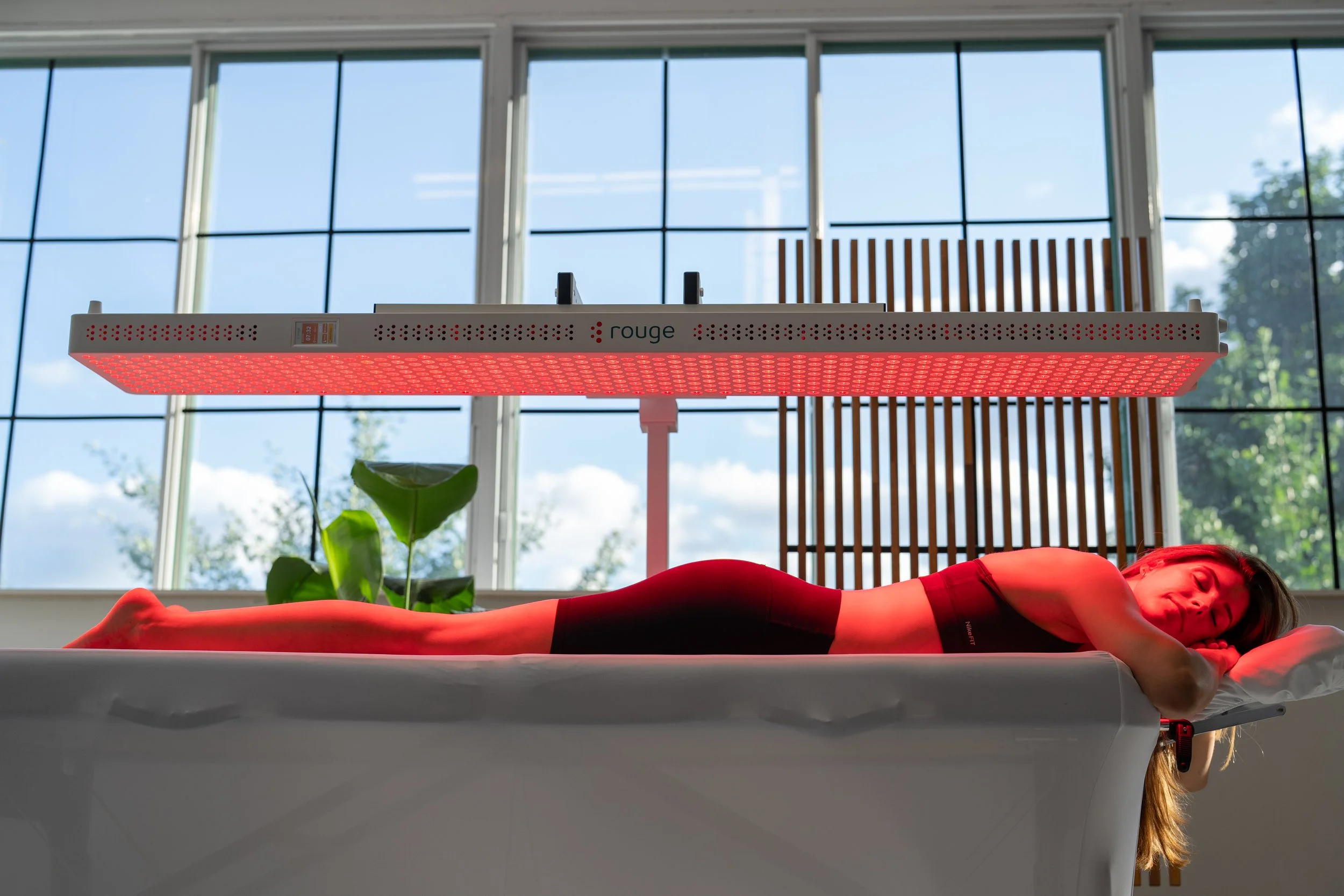
RED LIGHT THERAPY
8 Wavelengths & Patterning
All 8 Wavelengths are represented equally in each group of 4 LEDs:
Our G4, 8 Wavelength Dual Chip line of lights, feature red 630,650, 660, 670, 810, and NIR 830, 850, 1060 wavelengths. This combines the best blend of equally represented wavelengths evenly delivered at clinical level of irradiance
Our carefully selected wavelength combination ensures that your body is benefitting from light most active on the surface of your skin at 630nm increasing gradually up the spectrum all the way to 1060nm which offers the deepest levels of treatment.
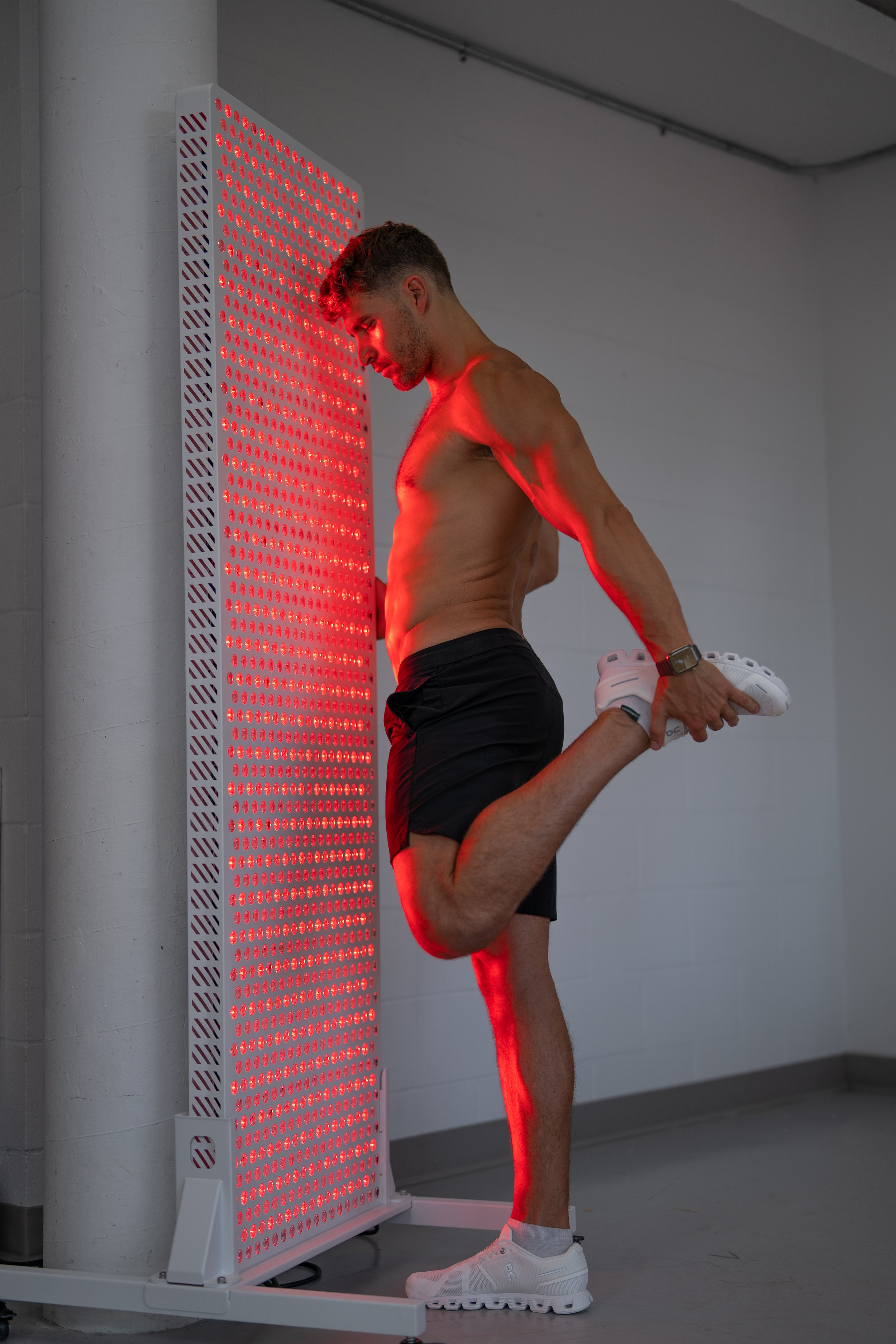
Session Guidelines
A mindful approach to safe, balanced, and effective light therapy.
Our Presets
What each preset does and why we built it that way
WELLNESS - all wavelengths · 100% · 15 min
A daily full-spectrum dose. Shorter than the therapeutic presets because it is intended for everyday use across all users and skin types. Functions as a broad-benefit, sustainable baseline — the "everyday" mode users default to when they don't have a specific target.
Skin & Hair 630/650/810/830 at 80% · others off · 10 min
A targeted, gentler cosmetic protocol. 630 and 650 nm work on surface skin (texture, tone, fine lines); 810 and 830 nm support dermal-level circulation and lymphatic flow that benefits skin from below. Deeper wavelengths (850, 1060) are off because their reach doesn't add to skin-specific outcomes in a short session. Intensity is dropped to 80% because skin responds best to consistent moderate exposure rather than maximum dose.
Muscle Recovery all wavelengths · 100% · 20 min
Full spectrum at therapeutic dose. Deep NIR (especially 850 and 1060 nm) reaches muscle tissue, while red wavelengths support upstream metabolic processes that aid recovery. 20 minutes ensures adequate dose at depth without overextending session time.
Joint Pain all wavelengths · 100% · 20 min
Same photonic profile as Muscle Recovery. Joint conditions benefit from the same deep-NIR reach plus red-light anti-inflammatory pathways. We keep the preset distinct in the UI for user clarity, but the panel runs the same protocol — the differentiation lives in our distance and frequency recommendations rather than in the panel output.
Sleep 630–670 at 100% · 810–1060 off · 20 min
Red-only, NIR off. Visible red wavelengths (particularly 630 and 670 nm) are associated in research with circadian rhythm and melatonin support; NIR is more often linked to systemic energy and metabolic activation, which is not what you want before bed. Excluding NIR is a deliberate wind-down design choice.
Fat Loss all wavelengths · 100% · 20 min
Full spectrum at full intensity. The published research on PBM and adipose modulation is most established at 1060 nm, with supportive cofactors across red and shorter NIR. The full stack at therapeutic time ensures the deep wavelengths reach target tissue and the supporting metabolic pathways are activated.
Give yourself some time. Rouge panels are powerful. To ensure your maximum comfort, we recommend a gradual introduction to light therapy.
The 3-Minute Baseline. Is it your first time? Start with a 3-minute introductory session to allow the body to acclimate.
24-Hour Observation: Give your body at least 24 hours before your next session to ensure no sensitivities (fatigue, blemishes, or headaches) occur.
All clients must use the provided goggles. The light is intense and eyes should remain shielded for the entire session.
Monitor your body’s response across various wellness markers, including sleep quality, energy levels, and the management of acute or chronic pain.
What is Red Light Therapy?
Red Light Therapy uses specific wavelengths of red and near-infrared light at controlled intensities to stimulate biological responses in human tissue. Initially observed in the early 1900s, its effects were later explored in NASA experiments that examined how different light wavelengths influence plants and humans, yielding notable results. Since then, researchers and clinicians have expanded the evidence base: more than 3,000 scientific studies now describe the therapy’s mechanisms, benefits, efficacy, and a range of clinical and wellness applications.
Is Red Light Therapy Safe?
Yes. Not only are there thousands of peer-reviewed studies demonstrating the effectiveness of Red Light Therapy; what really sets red light therapy apart from the crowd is its safety profile. In all the studies conducted on the treatment, the common thread was that the treatment produced no adverse effects.
Notably, the wavelengths in our Red Light Therapy Lights are not like the wavelengths in a tanning bed and thus do not have any of the harmful UV wavelengths that are associated with skin cancer. And as the wavelengths do not produce heat, and our lamps only emit a gentle warmth that is soothing and enjoyable and it is safe to touch the surface of our lamps
How does Red Light Therapy Work?
Red light therapy has been featured in more than 3000 scientific studies; thereby the fact that it is effective has been quite well established. It is difficult to measure the biochemical processes that unfold on the cellular level; however there are universally accepted standing hypotheses on how red light affects the human body.
The scientific community postulates that the process involves a reaction by the body to these specific wavelengths of light. Since near infrared and red light wavelengths can be found in the sun; our bodies are inherently receptive to these beneficial wavelengths.
With red light therapy; the therapeutic process begins in the mitochondria. In the modern world, we are exposed to so many things that cause cellular stress, from radiation, free radicals, ph imbalances, injuries etc. An overabundant byproduct of this oxidative stress is Nitric Oxide (NO) which, to the detriment of the cells, binds with an enzyme called Cytochrome C Oxidase in the mitochondria. The fundamental pathway of action by red light lies in the decoupling of this bond through a mild stress influence on these organelles. This process frees up the Cytochrome C oxidase to optimally produce ATP, the energy that all powers all living cells.
The benefits of this are significant, but they don’t stop there; the release of Nitric Oxide is also very advantageous, as NO acts as a natural vasodilator, relaxing the walls of the blood vessels and allowing more blood to flow which in turn can help speed up healing and help reduce inflammation. There are many cascading and beneficial spinoff effects that take place as a result of these core processes which is why red light therapy has been associated with so many positive health outcomes.
Human cells are densely packed with mitochondria, and good cellular respiration is fundamental to good health. One medical hypothesis holds that the degradation in the quality of the mitochondria through the over-accumulation of free radicals, can actually speed up the aging process. This may be one of the reasons that the use of red and NIR wavelengths on human tissue are so closely tied to anti-aging benefits.
What Does Red Light Therapy Potentially Help With?
The many reported benefits of Red Light Therapy include but are not limited to:
Boosts collagen to firm, smooth, and brighten skin.
Reduces inflammation to ease scars, stretch marks, and redness.
Supports cognitive function for sharper focus, enhanced memory, and mental clarity.
Regulates circadian rhythm and powers your mitochondria for deeper sleep and steady energy.
Eases joint pain and speeds natural healing and improving tissue repair.
Enhances circulation in muscle tissue to reduce soreness and speed up post-workout recovery.
Red vs Near-Infrared
A therapeutic treatment using red and near-infrared wavelengths (typically 600–1060 nm) to deliver proven health benefits to various tissues. Red light therapy works at the cellular level to enhance your mitochondria’s energy production. It promotes faster recovery, improved skin elasticity, reduced scars, support for fat loss and muscle gain. All in a safe, natural, and powerful way.
Red Light (600–700 nm): Targets surface areas—skin tone, scars, wrinkles, fine lines.
Near-Infrared (800–1060 nm): Penetrates deeper—muscles, joints, tendons, internal organs, and even the brain (e.g., mood, focus, recovery).
Our panel provides 8 unique wavelengths, 4 red and 4 near-infrared
Frequency:
From 3-5 times per week, up to daily treatment as necessary. If more than once per day is required, sessions should be at least 6 hours apart.
Who should avoid Red Light Therapy?
Pregnancy
Implant or Medical Devices
Hyperthyroidism
Skin Cancer
Photosensitivity
Open wounds and skin lesions or recent sunburn
Epilepsy
FAQs
How often should I use red light therapy
1
From 3-5 times per week, up to daily treatment as necessary. If more than once per day is required, sessions should be at least 6 hours apart.
What do I wear and does sunscreen & make up effect my session?
2
Just like clothing blocks UV light from reaching your skin, it also prevents red and near-infrared (NIR) light from penetrating effectively. Sunscreen, while designed to shield against UV rays, can also act as a barrier to red and NIR light, limiting its depth of absorption. And if you wear makeup, keep in mind that many foundations contain SPF, which can have the same effect. To maximize your treatment, consider using red light therapy in the morning before applying makeup or at night after washing your face.
How far should I be from the red light panel?
3
As a general rule, for skin-related benefits, positioning yourself 12-36 inches from the device is recommended, while deeper tissue concerns call for a closer range of 6-12 inches. Adjust as needed to optimize your results!
How long are the sessions?
4
The general guideline for red light therapy sessions is 10-20 minutes, but there’s room for flexibility since every body responds differently. On the flip side, longer isn’t always better. That’s why we have your presets on our panel so that you are getting consistent results with the right duration of treatment. Consistency is key!
While red light therapy is one of the most promising treatments available for a range of issues, it’s important to manage your expectations. First and foremost, it’s not a miracle cure. One reason regular, consistent use is key is that once treatment stops, the benefits may start to fade, and the issue could return.
Second, red light therapy is a process. Like many effective treatments, it requires patience and dedication. If you don’t see immediate results after a month, don’t panic. Even if visible changes aren’t apparent, there’s likely a lot happening at the cellular level—building collagen, healing tissue, and stimulating stem cells all take time.
Ultimately, red light therapy works by enhancing the function of your cells, helping your body tap into its own healing abilities.